Thursday, February 20, 2014

Backpack Journalism workshop: Day #1

Bill Gentile
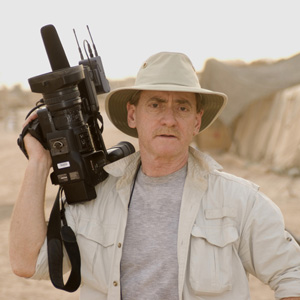
I am live blogging from a workshop about backpack journalism. The idea is that you can fit everything that you need to tell a story in your backpack: laptop, camera and a microphone. I hope to bring back ideas and information to my journalism students after this workshop.

Bill Gentile is running the workshop. Here is his website.

There are six people in the workshop, including a woman named Zar from Afghanistan and a gentleman named Jerry who flew in from Western Africa!

Let's get started.

When filming:
50% should be close-ups or extra close-ups
25% medium shots
25% wide or extra-wide shots

What makes a good character? Three tests:
  • Take your camera and walk around with your camera down. Wait for someone to come to you who wants to talk to you. These people will open up to you and be willing to talk. People who want to be characters.
  • They must have compelling stories to tell.
  • Can they tell the story? Are they articulate?
If we learn how to DECONSTRUCT a story, we will know how to CONSTRUCT it.

Story - How do we get there?
  • Individual clips. (Words)
  • Then we build sequences. (J and L edits, etc...) (Sentences)
  • Then you build scenes. (Paragraphs)
Shoot at least 20 seconds for each clip.
  • Make pictures that MOVE. Find places where you can have cutting points. (If focusing on someone writing (close up) and they reach up and touch their nose, that is a cutting point.)
Don't use LCD screen. Hard to see in light. Sucks up battery. You can't get a good sense of what is going on. Can have a conversation with someone. Should look

Connect the subject to the audience and the audience to the subject.

Learn to use your body as a tripod. Left hand should be support for the camera. You can distribute your weight down to your hip. Left elbow should be down toward your hip, knees slightly bent.

Shoot at eye level.

Clip alphabet:
  • Extra close-ups. (Close-up of an eye)
  • Close-up (Close up of face) (Can take off some of the hair, but don't take the chin off. Want to be able to have a lower-third)
  • Medium shot (Top of head to the belt)
  • Wide shot (Head to toe)
  • Extra wide shot
  • Tracking shot (Following someone. Cameraman does not move)
  • Pan shot (Stitching together information. Person-to-person)
  • Tilt (Up and Down)
  • Zoom
  • Point of view (If you shoot someone walking over brush, then you walk over the brush so you can see what the character is seeing.)
  • Over the shoulder (Ties the character together with what they are doing or connecting two characters together)
Start with establishing shots or master shots.
Then start shooting visually interesting/defining things around the room. 
Then start shooting characters (The Six Shot System)

The best stories are about CONVERSATION.

Six Shot System:
  1. Close-up of hands.
  2. Close-up of face.
  3. Medium shot to put together face and hands.
  4. Wide shot (head to toe) (Gives more context of what is going on)
  5. Over the shoulder (Tight)
  6. Extra-wide shot to put the subject in context
Informal interviews. (Magic questions):
  • What are you doing? (Present)
  • What did you just do? (Past)
  • What are you going to do? (Future)
ALWAYS shoot with headphones on.

Controlling idea: "My documentary shows ________________________." If you can't answer it, it isn't a story.

Script - Should be able to hand the script to an editor with the footage and he should be able to edit it together.

Thursday, February 13, 2014

Finding your story

"I don't know what to write about."

If you teach English, you have heard that statement numerous times. I know I did when I taught English.

In my new role teaching Convergence Journalism, my students often struggle to develop story ideas that are unique and fresh.

For example, they want to tell a story about football, which is a very broad topic.

I often ask, "What story about football do you want to tell?" They struggle to dig deeper and come up with a story angle that is more specific than the broad topic of football.

To attack this problem, I returned to my English roots and Kelly Gallagher's Six Modes of Writing from his book Write Like This.

The six modes of writing are:
1. Express and reflect
2. Inform and explain
3. Evaluate and judge
4. Inquire and explore
5. Analyze and interpret
6. Take a stand/propose a solution

First, students generate a list of interest areas. These are the broad topics that they will then narrow down. For example, some of my broad topics include:

  • Coaching
  • Teaching
  • Football
  • Journalism
  • K-State
From there, students will choose one of their interest areas and develop 2-3 story ideas for each mode of writing. This gives my students between 12-18 different angles, rather than the broad topic of "football."


Here is a simple handout that I use:


I always model this for my students first. Just like when writing, I employ the "I go, you go" approach where students see me model first and then they proceed to develop their own story ideas. Here is a picture of my modeling of the topic "football."


In five-ten minutes, I generated 19 viable story ideas for the broad topic of football. If needed, I could turn all of these ideas into stories.

So far, my students have only picked one from their list and turned that into either a video package or written story. My next step is to have the students choose one written and one video story from their list to combine together as a package.


I have found this method forces students to dig much deeper and come up with better story ideas. 

What methods do you use to have students generate story ideas?

Sunday, January 26, 2014

Packaging Plays: Stick & RB Screen

I love packaging plays together. It has become the option attack of the new millennium.

Previously, I wrote about packaging Inside Zone and Quick Screens, the Draw-Stick concept, and the Double Screen.

One other packaged concept that we started using was combining the Y-Stick concept with the RB Jailbreak Screen.

The play is very simple. Out of trips, we run Y-Stick to the trips side and the RB Jailbreak to the single receiver side. The QB counts numbers. If he sees 3-on-3 to the trips side, he will look off the stick, retreat and throw the RB screen. If he sees 3-on-2 to the trips side, he will throw the stick concept immediately.

Here is the play drawn up:


We love this play vs. man coverage, especially since Y-Stick is not very good vs. man.

Here is a cut-up of the play:

Oh Snap!

You need to install Silverlight to watch Hudl presentations.

Download Silverlight

Need help installing Silverlight? Click here.


This has been a great concept for us. We are going to experiment with other quick game concepts out of this, as the possibilities are endless.

What other plays are you combining together?


Thursday, October 31, 2013

Mentor texts outside of the English classroom

This year I moved to a new teaching assignment called Convergence Journalism, which is basically an English class on speed. Think of it as writer's workshop, but with video cameras, editing software and a blog. My students create videos and write stories for our school website. I am also teaching a class called Sports Information where students read, write and talk about sports.

In this transition, I have relied on my English roots. If you are a regular follower of my blog, you know that I am a huge fan of the Yoda of English teachers: Kelly Gallagher. Specifically Gallagher's latest book Write Like This. From this book I have borrowed many ideas, but the one I am using the most now is his idea of mentor texts.

The idea is that students first analyze how professional writers write, then emulate that style with their own writing.

We do this analysis through first close reading the text. This is no different from how my students used to do Articles of the Week in English class. The students need to see the moves and style that writers employ.

Once we have performed a close read, we then move to using it as a mentor text. I follow Gallagher's model of we go, I go, you go. The steps look something like this:

We go: Analyze the text together. Look at the style of the writing. Examine the sentence structure. We look at what the author is SAYING, but also what the author is DOING. This offers two very different perspectives of a text.

I go: Gallagher says that the teacher is the best writer in the room. I agree, and believe that students need to see their teacher writing in front of them, even if they are struggling with it.

This. Is. Scary.

I don't know if there is another thing in teaching that makes one feel as vulnerable as staring at a blank computer screen and writing from scratch while 30 students are watching.

I revised that last sentence at least five times, but you didn't see me do it. When you write in front of your students, they will see you go through the entire writing process, warts and all.

One tip: Don't write for more than five minutes at a time. I found that if you write for too long, students will begin to zone out or lose interest. At some point they will get the point and be ready to write on their own. This is when I stop and we move on to the next stage.

You go: Students are then responsible for taking what they saw in the mentor text and my writing and applying it to their own work.

I know what you are thinking: There is a fine line here between plagiarism and creating your own work here. I tell my students that we aren't emulating the IDEAS of the author, but his/her STYLE. I also tell them that they would not want to write so close to the same style of a writer on a true academic paper that a teacher might think they are plagiarizing. It is a fine line.

One of the first mentor texts I use is this book review for Catching Fire that falls under Gallagher's writing categories of Analyze and Interpret, as well as Take a Stand/Propose a Solution. In order to write a good review, students must analyze the subject and take a stand about it.

We look at this book review closely. What does the author do?

I point out to students that it isn't just plot summary; in fact there is only one paragraph that addresses the plot specifically. They notice that there is a paragraph comparing it to the previous book. There is one that analyzes a character. Another talks about the author. Finally, they notice that one short paragraph gives the writer's opinion of the book.

Then I write in front of them.

Finally, I turn them loose to write their own reviews of a book, movie or restaurant. Here are a couple of the results:

Succotash: The Hipster's Restaurant.

Monster's University.

As you can see, the students took the writing model and put their own spin on it. Had I just said, "Write a book review" I would have seen 90% of the paper just retelling the plot.

This is how I implement mentor texts in my Convergence Journalism class. In upcoming blog entries, I will show other mentor texts I have used along with student examples.

Wednesday, September 25, 2013

Standards Based Grading + The 3P System

A few years ago, I stopped grading my students' work. It was scary, but very rewarding. Instead of grading work, I began assessing their skills and progress throughout the year.

I borrowed my ideas from Steve Peha's 3P Grading System.

I also wrote about "Five Reasons Why You Should Stop Grading."

During this time, I began looking at Standards-Based Grading. If you aren't familiar with SBG, here is a great article from ASCD the explains the concept.

After a couple of years, I began to think about how the 3P grading system could be combined with Standards Based Grading. I wanted to give students the feedback that SBG provides, but also allow students ownership of their grades that the 3P system provides.

Here is the new grading system I developed:

1. Everything is based on a 4-point scale, much like official GPA transcripts:

4=A
3=B
2=C
1=D
0=F

2. I still do a participation grade that is worth 1/3 of their overall grade. 

I conference with students at midterm and quarter about their participation grade. They give themselves a grade (out of 4), and I give them a grade (out of 4).

I have the students fill out this rubric to help them determine what grade they would give themselves.

The student and I must be within 1 point of each other. For example, if the student gives themselves a 3 and I give them a 2, then we are OK. However, if the student gives themselves a 4 and I give a 2, we must come to a compromise. Either I must come up to a 3, or the student goes down to a 3. Either way, we must be within one number of each other.

3. I eliminated the "Progress" component from the 3P system. For me, it was too vague and difficult to assess. 

4. Instead, we have three weighted grades:
Participation = 1/3
Writing Assessments = 1/3
Performance = 1/3 (Anything not covered by writing, such as Socratic Seminars)

5. After the participation, we added SBG.  Each assignment that we grade has multiple “Standards” that we assess. So one assignment may have 3-5 grades. In the gradebook, it looks like we have a ton of grades, but it is really multiple grades for one assignment.

Here is a rubric we used for our Animal Farm assignment. As you can see, there are six grades that will be entered into the gradebook. This allows me to see what each student is doing well on or needs to improve. It also allows me to track the class as a whole, providing data on trends within the class.

6. Because everything is out of 4 points, you have to change what grade percentages correlate with each letter grade. I multiplied the lowest grade that would be rounded up, and figured out what percentage it would be. For example, 3.45 / 4 = 86% which is the lowest percentage to get an A. 

This is confusing, but here is the formula:

A= 3.45-4.0        (86%-100%) 
B = 2.45-3.44     (61% - 85%)
C = 1.45-2.44     (36% - 60%)
D = .45-1.44       (13% - 35%)
F = 0-.44             (0% - 12%)

Kids and parents will freak about this because they could have a 65%, but it is a B. However, a B is a 3 out of 4 in the GPA grading scale. I tell them to LOOK AT THE LETTER GRADE AND IGNORE THE PERCENTAGE!

7. A grade book might look something like this:

Teacher participation: 4
Student participation: 3
Synthesis: Evidence: 3 (Writing)
Synthesis: Claim: 2 (Writing)
Synthesis: Conventions: 4 (Writing)
Ignite Talk: Preparation: 4 (performance)
Ignite Talk: Visuals: 3 (performance)

In this example we have the participation grade, and two assignments: Synthesis and an Ignite talk. The synthesis has 3 grades, and the Ignite Talk has two grades. The synthesis would go in as a writing assessment, and the Ignite Talk would be performance.

Each of these categories (participation, writing, performance) is weighted 1/3, so the computer does the math. Without doing the math, this student would be somewhere between a 3 and a 4, likely closer to a 4. 

8. Students may REDO any standard that is below a 3 UP TO a 3. This allows students the chance to correct and learn from their mistakes.

For example, the student in #7 received a 2 for his claim statement. He may rewrite his claim to meet the criteria for a 3.

Not all students take me up on this offer, but many do. It is better than giving students an F and not allowing them a chance to learn from their mistakes.

This is not a perfect system, but it is better than what I had before. Students have ownership in a part of their grade by giving themselves a grade, but they can also see what areas they are doing well and struggling in through the SBG component.

Please ask any questions you have in the comments section.

Tuesday, May 14, 2013

All-Curl Concept

One of the most reliable and time-tested concepts in football is the Flat/Curl concept. Everyone from flag football teams to the NFL runs it in some form.

This year it was our most successful pass play. We were 14/16 on the play, a sign that we should have called it MORE throughout the year.

Here is a cut-up of our Curl concept from last year:

Oh Snap!

You need to install Silverlight to watch Hudl presentations.

Download Silverlight

Need help installing Silverlight? Click here.


Next year, we are looking to make one change. We are going to make Z a Choice route, similar to what we do with Z on our mesh concept.

This will give us two rhythm choices: Y-Spot vs. 2-High or Z-Choice vs. 0 or 1-High.

Rationale:
vs. a 2-High look there will likely be two linebackers, which provides more grass for the Spot.

Against a 1-High look there could be three linebackers in a 3-3, but we also like the post or fade vs. a 1-high Cover 3 or Cover 1 look.

This is what it will look like:

Monday, May 6, 2013

Teaching Animal Farm: Common Core-Style

When I was in high school, I studied George Orwell's Animal Farm through the lens of the Russian Revolution. I'm sure you did too. We had to learn which character represented whom. You know, Old Major represents Lenin... or was it Marx? See, almost 20 years later I can't remember.

If I can't remember, I should not expect my students to learn and memorize facts that will not be important to their lives after high school.

Previously, I wrote about close reading resources to support the Common Core. Animal Farm is one of the richest books we have on our shelves to teach two key concepts: rhetoric and satire.

This year, we had our students read the entire book, then we went back and taught rhetoric and satire through specific speeches. We didn't worry about which character represented whom in history; our objective was to get students to closely read and analyze the rhetoric in the speeches the characters delivered.

1.We used this lesson to teach rhetoric: the rhetorical triangle, appeals, and rhetorical strategies/fallacies.

2. Of course, the first major speech is from Old Major, imploring the animals to dream of a better future. Here is the text from the book that students performed a close read of Old Major Text.

3. After the close read, students then wrote about the text through a rhetorical precis. The rhetorical precis is a writing template that forces students to write about the text through the rhetorical triangle: author, audience and text. Here is a great template with power verbs that I found online. This is another fantastic explanation from Oregon State University.

4. After practicing with Old Major's speech, we did a summative assessment with two of Squealer's speeches combined: Squealer text. Students did a close read and then wrote another rhetorical precis over the speeches, analyzing the appeals and persuasive techniques. Here is the rubric we used to grade Squealer's speech.

5. Once we taught rhetoric, we switched gears to satire. We used a portion from Chapter 8 to teach satire: Chapter 8 text. Our purpose was to have students identify Orwell's elements and objects of satire. He uses satire throughout the book; however, the aftermath of the Battle of the Windmill is particularly rich.

Even after teaching Animal Farm this year, I still can't remember if Old Major represents Lenin or Marx. I don't care if my students can remember it either. However, I hope that they can take the skills that we taught them, such as close reading and analyzing rhetoric and satire, and apply them to much more challenging works as they move on through high school, college and beyond.